Rwanda’s Two Rainy Seasons Explained
Rwanda’s two rainy seasons explained: When to Visit and How Shoulder Seasons Affect Luxury Travel Prices
If you’re planning a trip to Rwanda - especially for gorilla trekking in Volcanoes National Park - understanding the country’s two rainy seasons is essential. Travellers often ask us: “When is the best time to visit Rwanda?”, “Is Rwanda worth visiting during the rainy season?”, and “Why are prices cheaper in certain months?”
We’ve written this handy guide which hopefully explains everything, including how weather patterns influence demand, availability, and pricing for high-end lodges and permits.
What Are the Rainy Seasons in Rwanda?
Rwanda experiences two rainy seasons, each shaping travel patterns differently.
1. The Long Rainy Season (March to May)
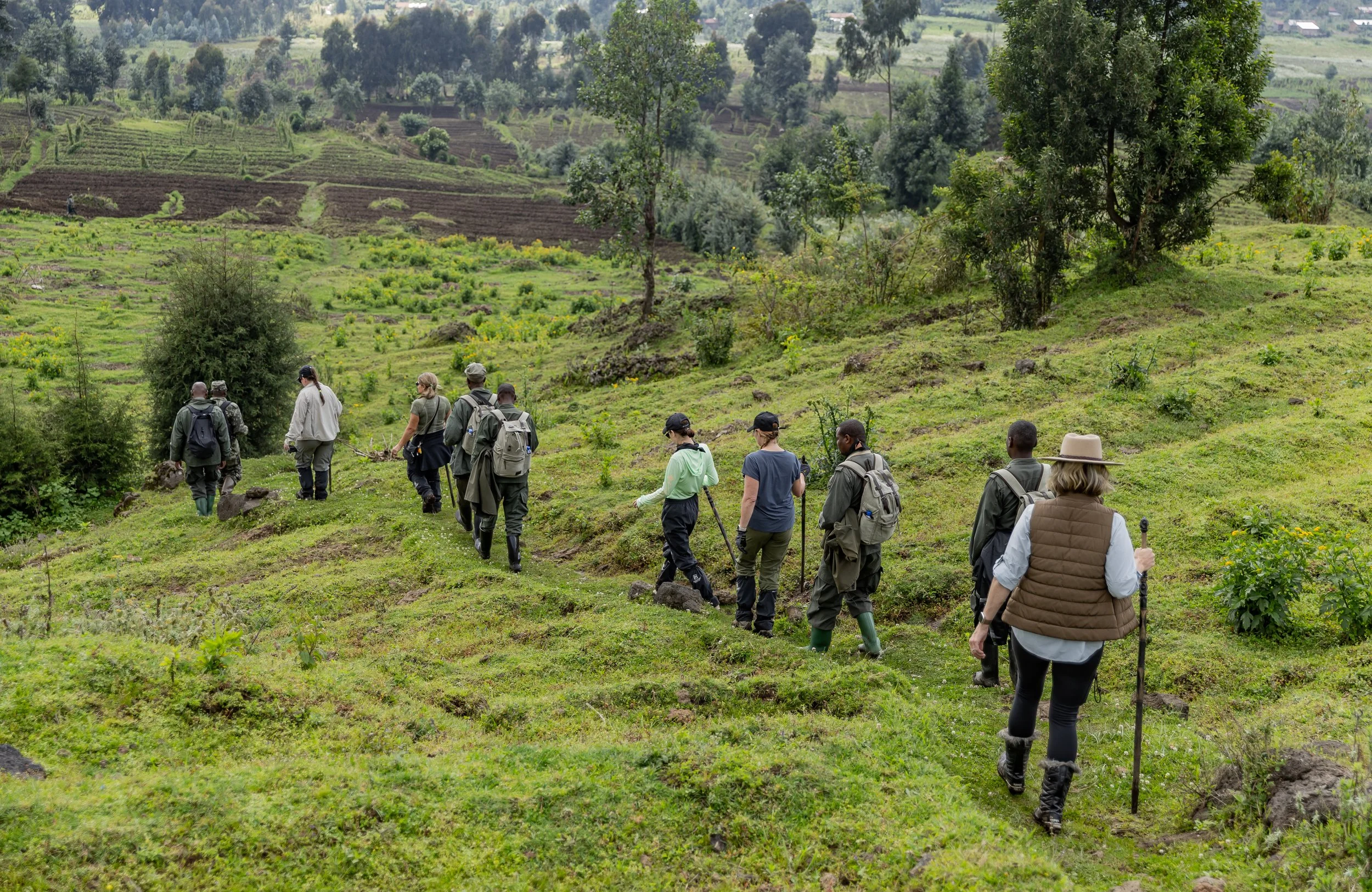
The long rainy season brings heavier, more consistent rainfall. Trails can be muddy and trekking conditions more challenging, especially in Volcanoes National Park, Nyungwe Forest, and Gishwati-Mukura.
Key considerations:
Daily showers are common
Trails become slippery, especially for gorilla and chimp trekking
Fewer travellers visit during these months
This seasonal dip in demand creates excellent opportunities for value-focused luxury travellers.
2. The Short Rainy Season (October to November)
This is a lighter, more predictable rainy period. Many mornings are clear, with rain developing later in the day.
Key considerations:
Short afternoon showers are typical
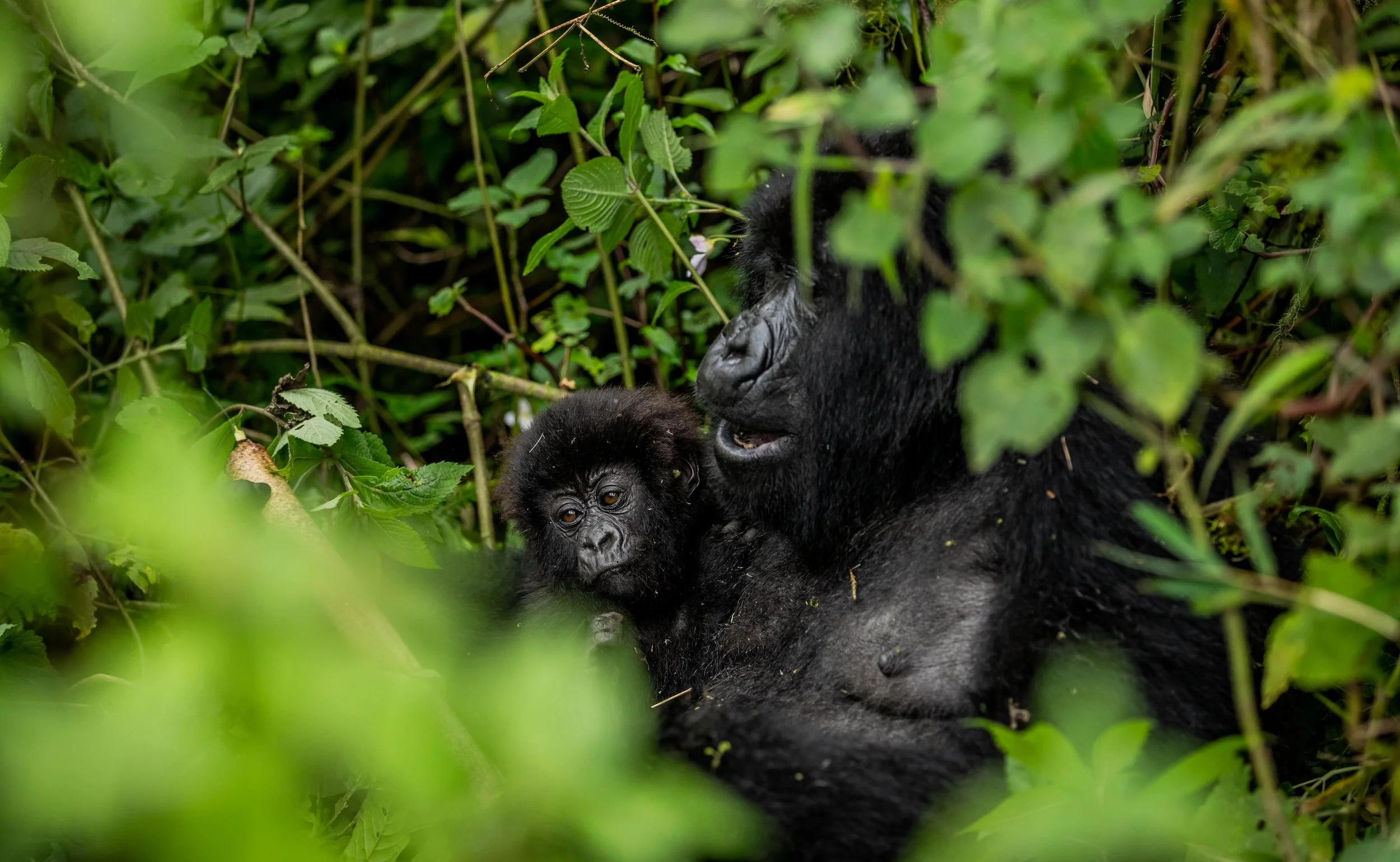
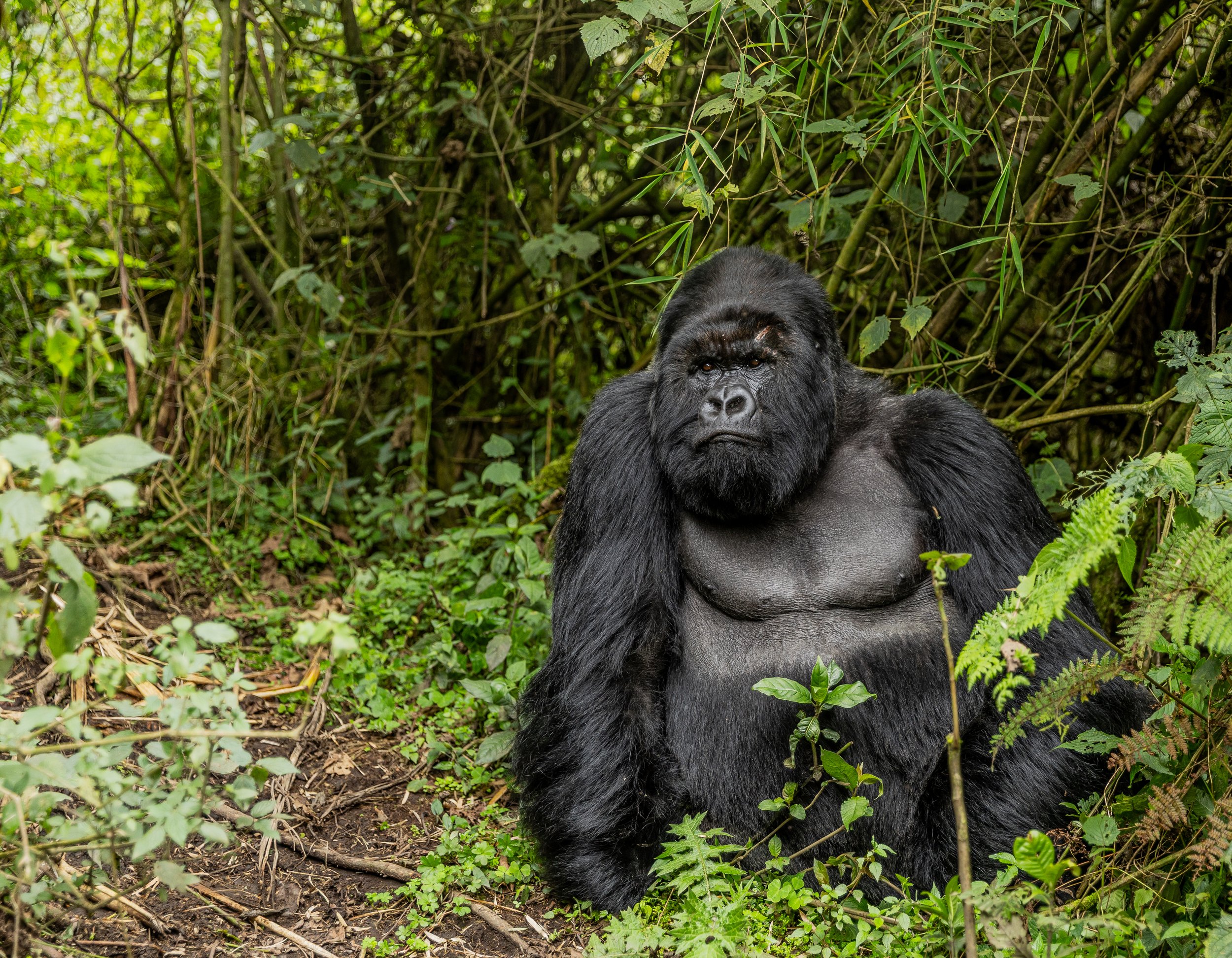
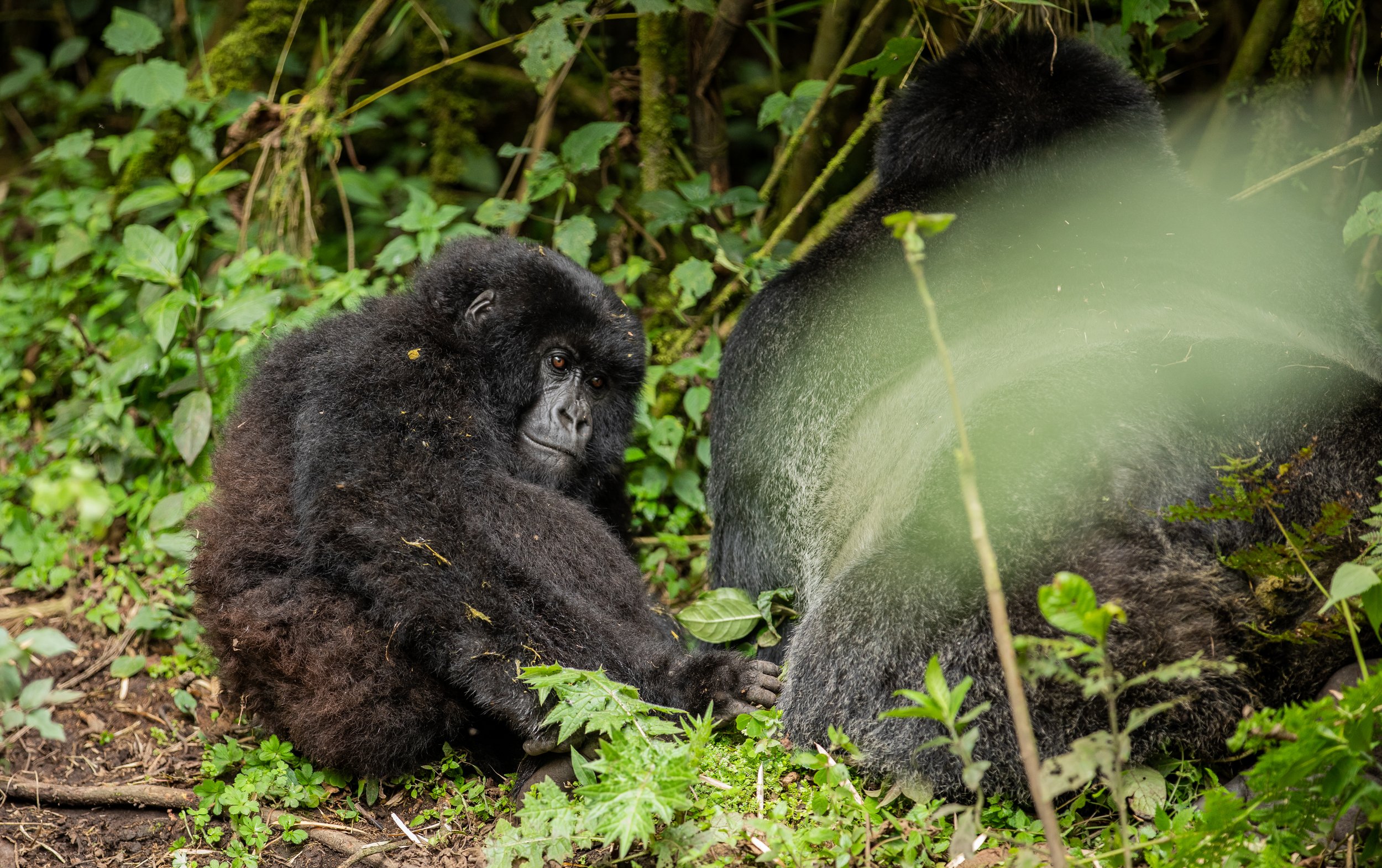
Gorilla trekking and wildlife viewing remain excellent
Wildlife tends to stay lower on the slopes, sometimes making treks easier
Fewer crowds compared to peak season
Because conditions remain favourable, this is considered Rwanda’s most attractive “value” season.
Why Are Prices Lower During Rwanda’s Rainy Seasons?
Travellers planning safaris and gorilla trekking often search:
“Why is Rwanda cheaper in March and April?”
“Does Rwanda offer discounts on gorilla permits?”
“Are lodges cheaper during the rainy season?”
The answer comes down to demand.
During both rainy seasons, visitor numbers drop - especially March through May. Rwanda Tourism and luxury lodge operators respond with meaningful incentives:
Typical Shoulder-Season Price Advantages
Gorilla trekking permits may drop from USD $1,500 to approximately $1,050 (seasonal promotions can vary).
Luxury lodges in Volcanoes National Park and Nyungwe commonly offer 10–40% lower rates than high season.
Greater availability and better chances of securing last-minute reservations - typically we book trips for travellers to Rwanda a year in advance, but email travel@princeadventures.com to make a last minute inquiry..
More intimate wildlife encounters with fewer trekking groups per day.
For travellers seeking luxury at a better value - without sacrificing quality - these months can be ideal.
Is It Worth Visiting Rwanda in the Rainy Season?
Another common question is: “Is Rwanda still good for gorilla trekking during the rainy season?”
The short answer: Yes. Absolutely.
If you’re ready to explore Rwanda, or build a shoulder-season itinerary that offers exceptional value, contact our team at travel@princeadventures.com.
Here’s why:
Reasons to Visit Rwanda During Shoulder Season
Greener landscapes and lush forests ideal for photography
Less crowded trekking routes
Wildlife often stays closer to the base of the mountains
Significant savings on both accommodations and permits
Easier to secure luxury lodges otherwise booked solid in peak season
The only trade-off is some mud and the possibility of showers, but for many travellers, the benefits far outweigh the inconvenience.
Best Time to Visit Rwanda for Gorilla Trekking (Based on Value and Conditions)
If you’re researching “When is the best time to visit Rwanda for gorilla trekking?”, here’s the simplified answer:
June to September: Best weather, premium pricing, highest demand
October to November: Best value-to-experience balance
March to May: Deepest discounts, wettest conditions
For most travellers seeking comfort and strong value, October–November can be the sweet spot. We did our first trip to Rwanda in early November for this reason.
Shoulder Season vs. High Season: Quick Comparison
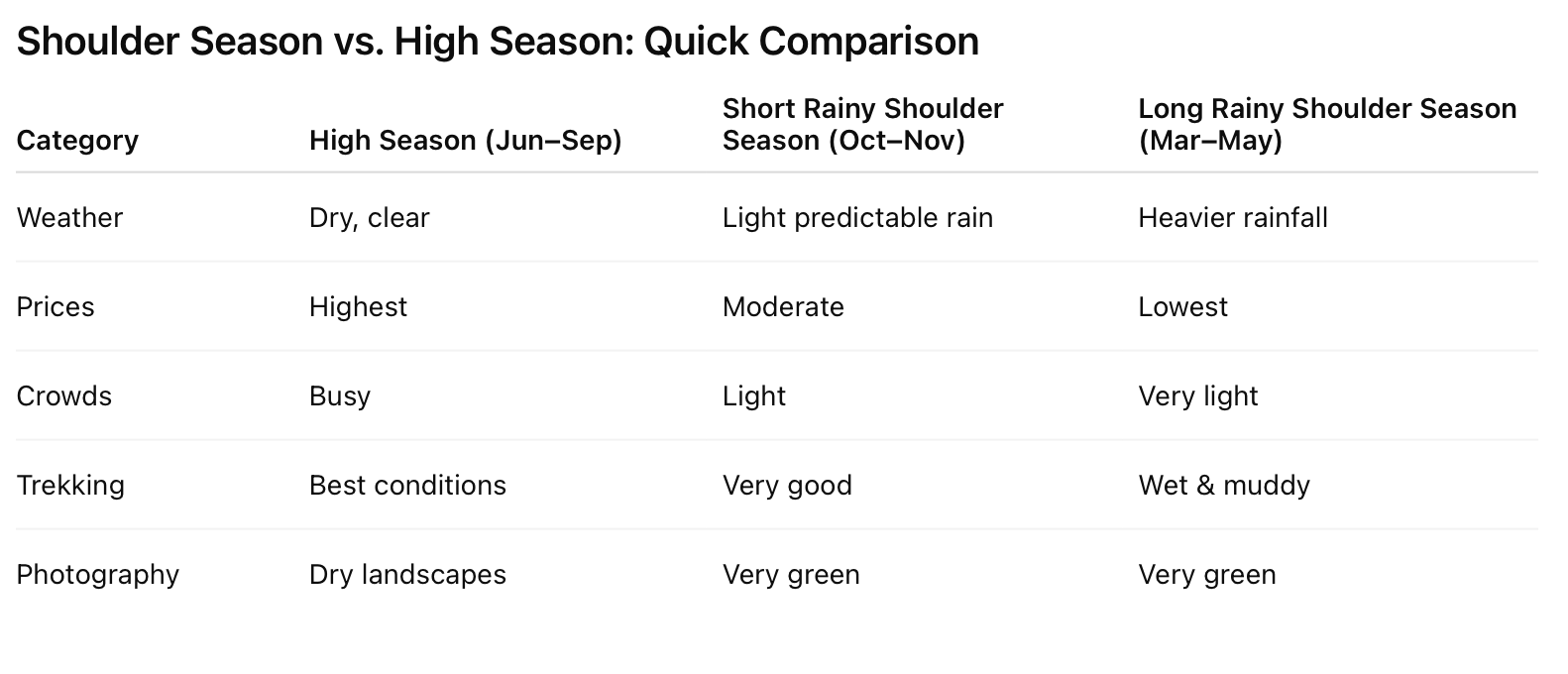
Quick Comparison - Here we’ve summarized most of this information into a helpful chart.
Frequently Asked Questions Travelers Ask ChatGPT About Rwanda’s Rainy Seasons
Including questions like these in your content helps match real search intent:
“Is Rwanda safe to visit during the rainy season?”
“Does it rain all day in Rwanda’s rainy season?”
“Are gorilla treks cancelled when it rains?”
“Which months are cheapest for Rwanda safaris?”
“What is the best month to visit Rwanda on a budget?”
“Is October a good time to visit Rwanda?”
“Will I see gorillas if it rains?”
These queries naturally guide readers toward understanding why shoulder season can be such a strong choice.
Final Recommendation for All Travellers
If you’re looking for the ideal mix of great trekking conditions, fewer crowds, and meaningful savings, the short rainy season (October to November) offers the best balance.
If maximum discounts are the priority and you don’t mind wetter conditions, March to May provides unmatched value.
Plan Your Tailor-Made Rwanda Experience
Prince Adventures designs curated luxury journeys across Rwanda, including gorilla trekking, chimp trekking, safari game drives, cultural touring, and high-end lodge stays. Discerning travellers trust us to plan their trip to Rwanda.
If you’re ready to explore Rwanda, or build a shoulder-season itinerary that offers exceptional value, contact our team at travel@princeadventures.com.